GitHub Spark
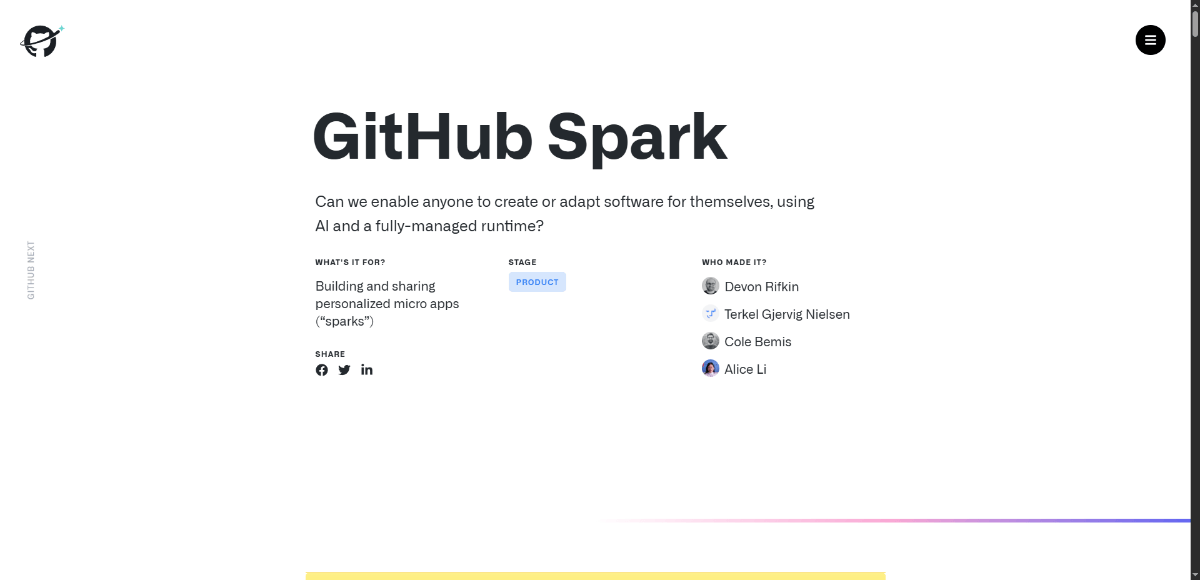
Build and share personalized micro-apps using natural language and a fully managed runtime—no code deployment or setup required.
About GitHub Spark
GitHub Spark is an AI-powered tool by GitHub Next that lets users create, iterate, and share “sparks” (micro-apps) through a natural-language editor. It provides a managed runtime environment with features such as deployment-free hosting, theming, persistent storage, and integrated AI models. Users can refine apps over time, view revision history, choose different AI models, and share or remix sparks with different permissions. Spark is in public preview for Copilot Pro+ subscribers.
Because GitHub Spark lowers the barrier to creating personalized apps: no infra setup, no code deployment needed, high level of polish, sharing/remixing, and built-in version history and model flexibility. It’s ideal for developers and non-developers who want to prototype fast, customize workflows, or build small tools without the overhead of traditional development.
Key Features
- Natural-language editor for describing and refining micro-apps (“sparks”) without writing or deploying code manually.
- Managed runtime environment: hosting, persistent storage, theming, auto-deploy, PWA dashboard.
- Revision variants & history: auto-saving versions, exploring alternate versions, restoring past iterations.
- Multiple AI model options: e.g. Claude Sonnet 3.5, GPT-4o, o1-preview, o1-mini.
- Share & remix functionalities: grants read-only or edit permissions; users can favorite or fork others’ sparks.
- One-click deployments: apps built are deployable immediately to desktop or mobile via PWA.
- Integration with GitHub ecosystem: ability to sync to repos, use GitHub auth, use Copilot and possibly Codespaces for editing.
Pros and Cons
Pros
- Makes app creation very fast and accessible, even for non-developers.
- Tight integration with GitHub services (repos, Copilot, auth) means seamless workflows.
- Multiple model options let users experiment with different outputs.
- Revision history & variants give safety and flexibility.
- Hosting, deployment, theming built-in — less setup / infrastructure needed.
Cons
- Still in public preview; some features may change or have UI / stability issues.
- Access limited: need Copilot Pro+ subscription; not available to everyone yet.
- Potential message / compute limits depending on plan.
- May not yet handle very complex or large-scale apps well; likely better suited for micro-apps or prototypes. (inferred from product stage)
- The managed runtime might impose constraints (e.g. on storage, deployment speed, backend complexity) compared to fully custom infrastructure. (inferred)
Frequently Asked Questions
Related Websites
Other websites you might find interesting
Qoder
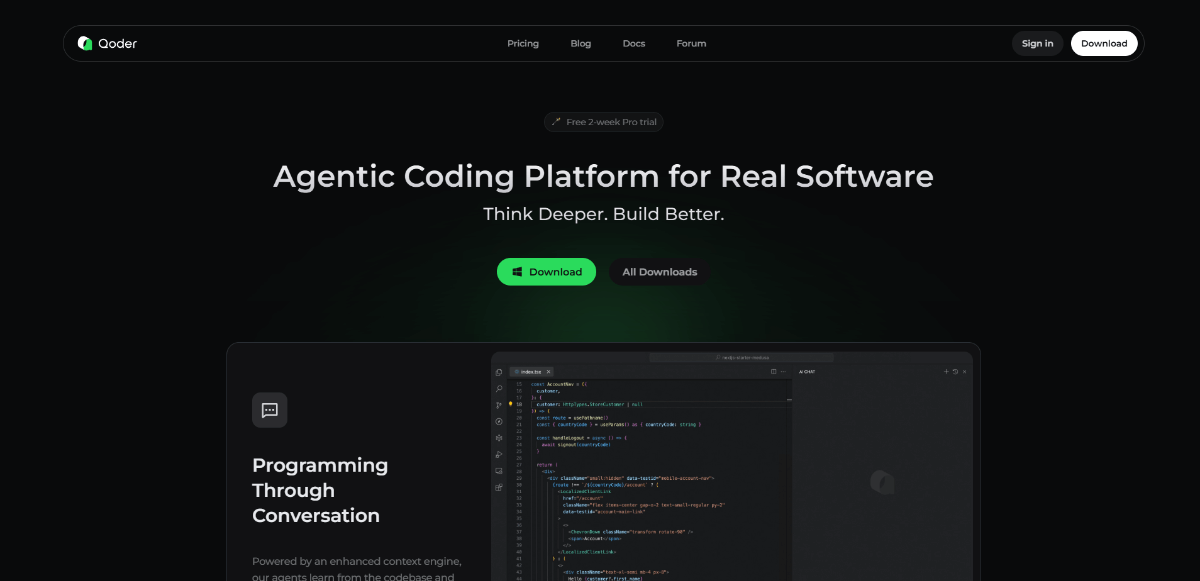
An agentic coding platform where AI agents autonomously build, test, and deploy code based on your project goals.
Supadev
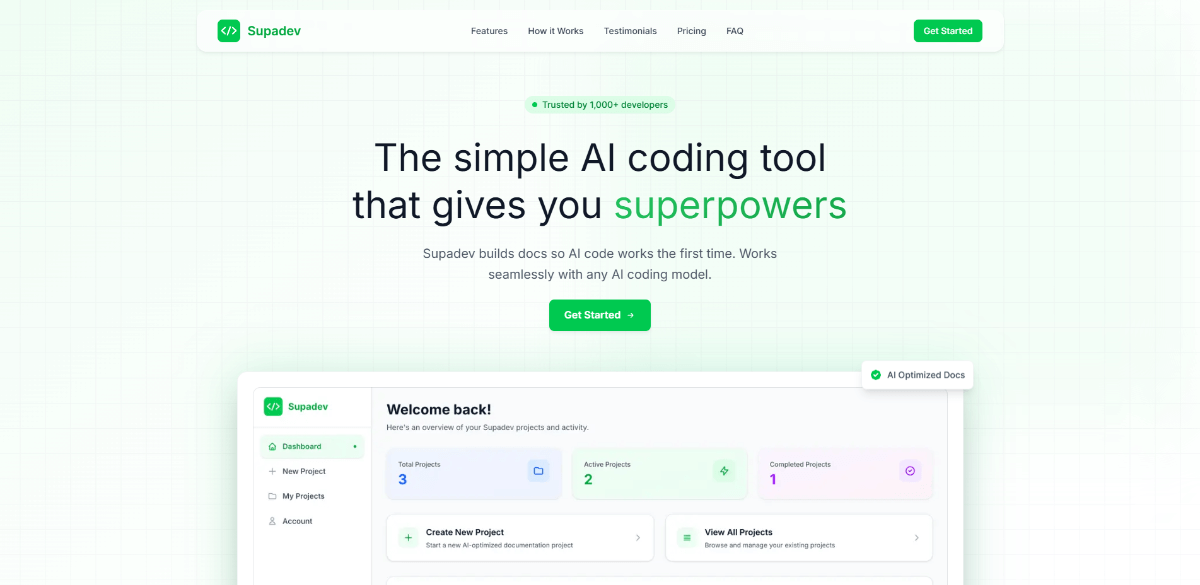
The simple AI documentation tool that gives you superpowers for development speed and fewer errors.
Flexpilot AI
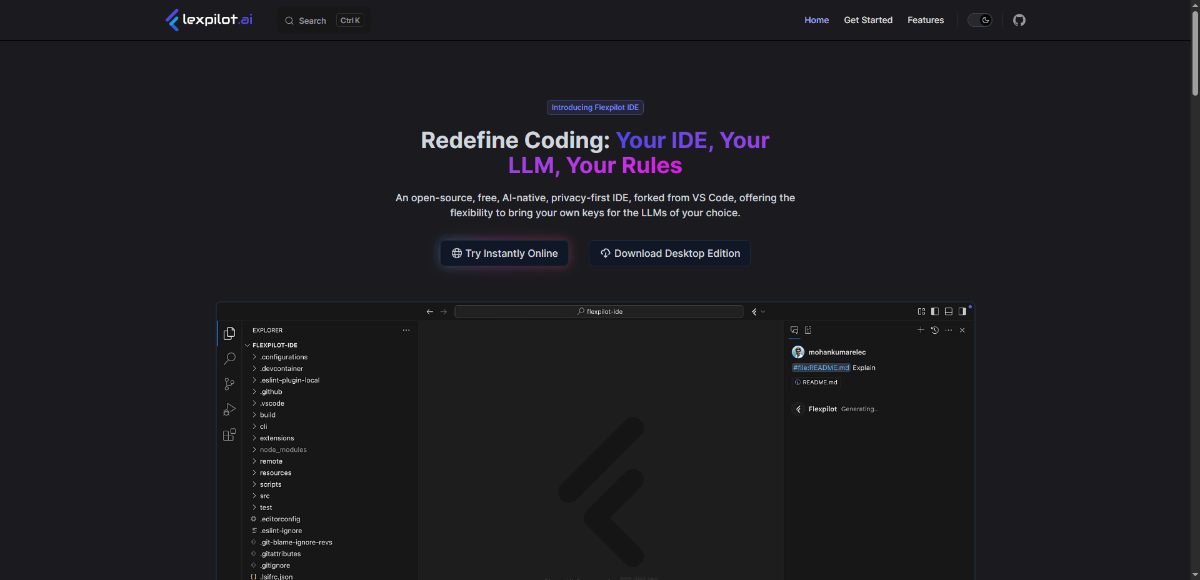
An open-source, AI-native, privacy-first IDE forked from VS Code, allowing developers to integrate their preferred LLMs using their own API keys.
Cimphony
AI-powered legal platform offering automated document drafting, compliance, and startup legal services.